• Projects
    • classics & the black atlantic
    • swimming up a dark tunnel
    • there are no parts
    • hidden things
    • accent of exile
    • a matter of taste
    • eleventh house
    • there are times and places
    • economies of care
    • meals for a movement
    • extracurricular
  • Writing
  • Criticism
  • About
  • Menu

Letticia Cosbert Miller

writer | classicist
  • Projects
    • classics & the black atlantic
    • swimming up a dark tunnel
    • there are no parts
    • hidden things
    • accent of exile
    • a matter of taste
    • eleventh house
    • there are times and places
    • economies of care
    • meals for a movement
    • extracurricular
  • Writing
  • Criticism
  • About
91n10BdFUFL.jpg

Dept. of Speculation - Jenny Offill

March 07, 2020

I inhaled this tiny, brisk novel by Jenny Offill. I’m not sure that there is much for me to add to the conversation about this renowned book, Dept. of Speculation.

Written in the style I would credit to Anne Carson, it is a first person narrated story about a woman and her marriage, accompanied by the inconsistent inclusion of a daughter, an ex boyfriend, a philosopher, and a space writer?? It is totally as wacky as you are thinking, and a delight to read, spliced with quotes from Greek and Roman antiquity, modern philosophy, and a few curiously abrupt racist ideas. If you find those as weird as I did, please let me know. I’m not sure what to make of them.

It is indeed a clever novel, which I enjoyed immensely. I read it in one day —yesterday. I do not think it gave me more than an enjoyable afternoon of reading, except perhaps a new appreciation for Anne Carson and her influence. Offill has a new novel, Weather, which I am now interested in reading though not desperately so.

71qQc04C93L.jpg

Heads of the Colored People - Nafissa Thompson-Spires

March 07, 2020

Before I begin, I just want to document how well this blog is working to keep me motivated and accountable. I’ve already read over ten books and it’s barely March (I’m behind on writing blogs for some of those books, though).

Alright, onto the task at hand. I’ve had Nafissa Thompson-Spires Heads of the Colored People on my shelf for some time now. I remember feeling a bit disappointed to learn that it was a collection of short stories, a detailed I overlooked when picking it up, and owed to the fatigue I felt from reading too many short stories last year. I really do love the form, but I sometimes find it difficult to remain interested throughout an entire collection, and I am often tempted to supplement them with novels, which only prolongs the issue, decreases my motivation, sense of accomplishment, etc.

In any case, I was in the perfect mood and mindset to read Heads of the Colored People this past month. I had no idea what to expect, and it wasn’t until I completed the book that I read Thompson-Spires’ declaration that she set out to write about the Black middle class and its complexities. And that she does, expertly. From the very first story I knew I was in for a ride as a “blue-eyed, wig-wearing brother in a purple suit” gets into a conflict on the sidewalk with a dystopian comic series writer named Brother Man. Later, two mothers write increasingly hostile letters to one another about their children who are not getting along with one another, in spite of being the only Black children in their school. Some stories are cruel (one incredibly so, but I won’t spoil it for you, but you’ll know it when you come to it), many laugh-out-loud funny, and all of them clever.

It’s been a long time since I felt, so clearly, that an author was having a conversation with me —not just telling me a story. I was reluctant to leave the world Thompson-Spires created for me in these stories, but suspect I will be back soon.

The Nickel Boys cover art by Neil Libbert and Oliver Munday

The Nickel Boys cover art by Neil Libbert and Oliver Munday

The Nickel Boys - Colson Whitehead

February 24, 2020

I first heard of Colson Whitehead (what a name!) from from my favourite podcasts hosts who were reading ads for The Underground Railroad. Honestly, I wasn’t interested in reading a story about enslaved people. My views on that sort of narrative have since changed but, generally, I find it difficult and, frankly, boring to read. So, when The Underground Railroad won the Pulitzer Prize I barely took notice, and again when I saw The Nickel Boys spread out in prime position at my favourite local bookstore, I hardly bat an eye. In fact, I wondered and frequently made the joke that I didn’t know what a Nickel Boy was and why I should care.

Reader, I humbly come before you today, my heart full of lament and regret for my misplaced skepticism, for The Nickel Boys will be remembered as one of the most magnificent pieces of literature I have ever consumed. Based on a series of true stories and histories, Whitehead weaves a brutal tale of the Jim Crow south (Florida) and incarceration with moments of exquisite tenderness. The brutality happens quickly, the pain never fades but is also never in the foreground. The softness —the ice cream, the orange sodas, the laughter between friends, these are the moments upon which Whitehead lingers. Whitehead speaks of the books protagonists, plural, Elwood and Turner, but it’s difficult to explain the unevenness with which they are portrayed, and yet the ways in which they are entangled. I can’t and shouldn’t say anymore than that. Whitehead does that thing I love, too, where he shares the sources he consulted in researching for this text —it’s truly incredible what these boys suffered at the hands of the state.

I was especially surprised to learn that this is Whitehead’s ninth book. Not only am I looking forward to reading The Underground Railroad, but some of his earlier novels, including The Illusionist. In the meantime, I’ll be patiently awaiting the accolades to be bestowed upon The Nickel Boys.

51GnyHTFdmL.jpg

Sister Outsider - Audre Lorde

February 20, 2020

My first in a very long time experience reading audiobooks was, in a word, annoying. Without realizing that it was approaching Audre Lorde’s 86th birthday, I decided to ‘read’ Sister Outsider in its entirety via audiobook.

While I am feeling quite smug to have consumed 7 hours of narration over a single weekend, I am truly surprised that this is a popular method of reading. I expected sound design, perhaps a chime in between chapters, inflections, laughter??? (I took my frustrations to Instagram and left with a load of recommendations for well narrated texts, and some even with full cast recordings!)

Cosmetics aside, Sister Outsider gave me so much this weekend. Lorde’s essays are wandering and diverse, cataloguing her experience of travelling through Russia (USSR) as a Black lesbian woman, to ruminations on Malcolm X and Martin Luther King in the 60s, to her thoughts on the power of poetry, women led movements, and white women’s allyship. Robotic recording and all, I think this might be the best way to absorb Lorde: aurally. But it mustn’t be the only way. Hers is the kind of writing that you have no choice but to return to, to savour, to digest– continually.

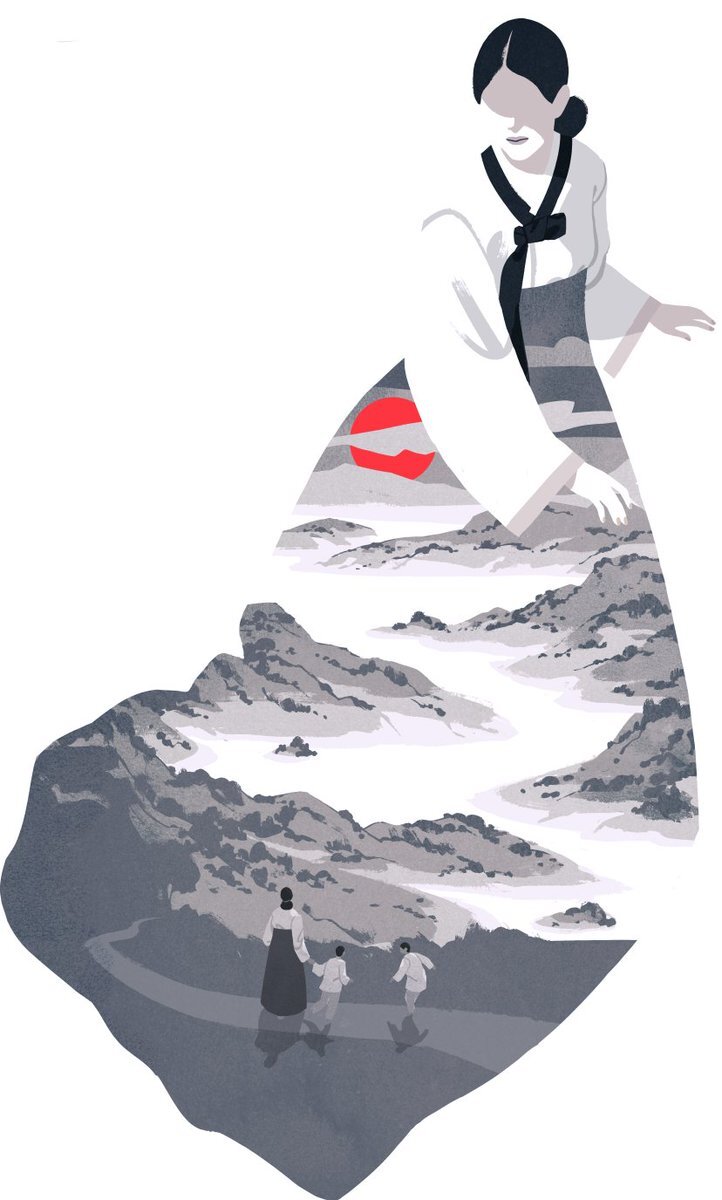
Pachinko book cover by Patrick Léger.

Pachinko book cover by Patrick Léger.

Pachinko - Min Jin Lee

February 16, 2020

I’ve delayed writing this blog post for months for no other reasons than laziness and absentmindedness, and now, I’m not certain I remember why I enjoyed reading Pachinko by Min Jin Lee as much as I did. I find myself sighing at it lovingly when it catches my eye from the bookshelf. I suppose this is the case with all (good) historical fiction, but I was truly surprised at how much I learned from reading this sweeping story of a family making their way–surviving, thriving–in Korea and Japan during the Second World War.

I could practically smell the fish in the markets, and feel the stickiness of the rice in my mouth throughout, and my legs would ache in empathy for the matriarchs of every generation whose labour (not only domestic) never seemed to cease. Lee is very good at this particular kind of writing that grabs hold of you and refuses to relent. By the end, the metaphorical use of Pachinko parlours for the Korean experience in Japan is crystal clear, even amid the generation of wealth and trauma these characters accrue in equal parts over the decades narrated.

It’s been a very long time since I’ve willingly read a book this length (nearly 500 pages!), and I would easily have read another 1,000. There are problems, of course, but none worth pointing out, at least not by me.

Prev / Next